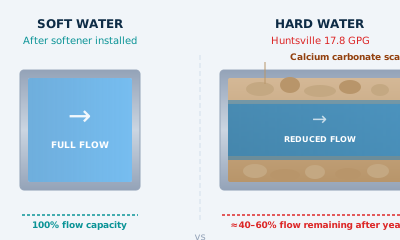
Private well water in Madison County commonly tests at 15–32 GPG and Limestone County wells at 16–20 GPG — both well above the U.S. city water average of 4.5 GPG. City water in this region is actually soft. If you are on a well and experiencing these signs, here is what you are likely seeing.
1. White Scale on Faucets and Showerheads
That crusty white or yellowish buildup around your faucet base and showerhead holes is calcium carbonate — the direct byproduct of hard water evaporating. At 15+ GPG, you'll see significant buildup within weeks of cleaning. If your showerhead flow has decreased noticeably, the holes are likely 50%+ blocked by scale.
2. Spots on Glasses and Dishes After Washing
Cloudy glassware that won't come clean — even straight from the dishwasher — is a hallmark of hard water. The minerals deposit on glass surfaces as water evaporates during the drying cycle. Dishwasher "rinse aid" helps cosmetically but doesn't solve the underlying problem.
Quick Test: Fill a clear bottle halfway with tap water, add 10 drops of dish soap, shake for 10 seconds. Minimal lather + milky water = hard water. Good lather + clear water = soft water.
3. Dry, Itchy Skin and Brittle Hair
Hard water minerals interfere with soap's ability to lather and rinse completely — leaving a film on skin that clogs pores and causes dryness. If you feel like you can never fully rinse off in the shower, or your skin feels tight after washing, hard water is likely contributing. Hair often becomes dull and brittle for the same reason.
4. High Water Heating Bills
Scale accumulates inside your water heater tank and on heating elements. The U.S. Department of Energy found that just 1/4 inch of scale reduces water heater efficiency by up to 29%. At North Alabama's hardness levels, significant scale can develop within the first 1–2 years of a new water heater. That's a direct hit to your monthly gas or electric bill.
5. Laundry Feels Stiff and Fades Fast
Hard water prevents laundry detergent from fully dissolving and rinsing out, leaving mineral residue in fabric fibers. Clothes feel stiff, scratchy, and look dull faster than they should. White shirts turn gray, colors fade prematurely, and towels lose their absorbency.
6. Frequent Appliance Repairs or Early Replacement
Dishwashers, washing machines, ice makers, and coffee makers all have internal components that hard water destroys over time. Scale clogs spray arms, coats heating elements, and jams valves. Studies show appliance lifespans in hard water areas are 30–50% shorter than in soft water areas. If you've replaced a dishwasher or washing machine earlier than expected, hard water is a likely culprit.
7. Reduced Water Pressure Over Time
Scale builds inside pipes just like it builds on your showerhead. In older homes — particularly those with galvanized steel pipes — hard water scale can reduce pipe diameter significantly over decades, causing chronically low water pressure throughout the house. This is one of the most expensive problems hard water causes, as it can ultimately require pipe replacement.
What to Do About It
The fix for hard water on a private well is a salt-based ion exchange water softener. For North Alabama well water at 15–32 GPG, a 48,000-grain softener handles most households. City water customers on Huntsville Utilities or LCWSA do not need a softener — city water in this region is already soft at 3.4–4.7 GPG. See the full softener guide for ranked picks.